


Not In My Backyard (german sub)
Society, Germany 2011
How can protecting society from sex crimes against minors be balanced against the re-integration of such criminals who have served their term?
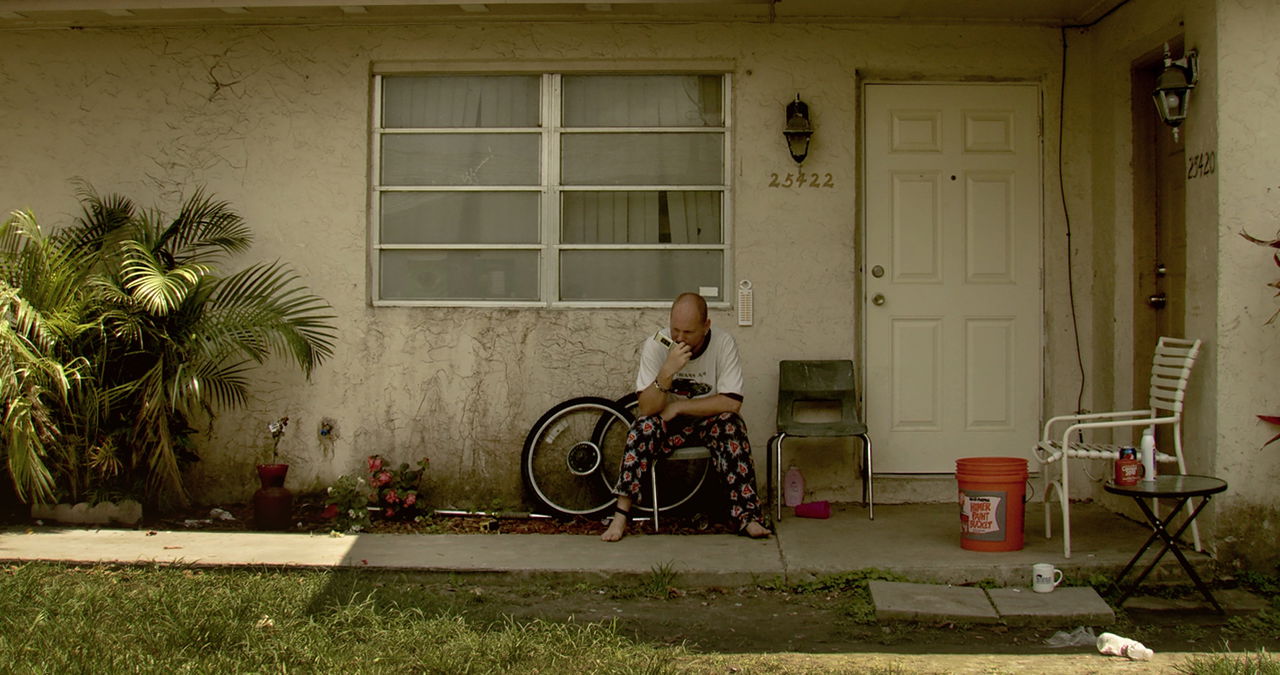
NOT IN MY BACKYARD tells the story Elliot and Teofilo. They are convicted sex offenders. Their victims were minors. The two men served their term, left the prison system and live on probation in Miami-Dade County, Florida. While on probation, they must wear an electronic ankle bracelet, must not leave their residential district, and observe a nighttime curfew. They must also choosing a place of residence that is at least 1,000 feet away from locations where children gather, including childcare facilities, schools, parks, and playgrounds.
While Elliot and Teofilo try to restart their lives, the required distance they must keep from places where children gather rises to 2,500 feet. The few places that remain suitable for them to live includes the passageway under a large bridge. For want of other options, it attracts a sizeable number of sex offenders against minors who set up tents and other makeshift accomodations.
The documentary sets in as this shanty town is being dismantled in the wake of a public outcry. In an attempt to understand how the protection of society can be balanced out against a fair chance of offenders who have done their time to reintegrate into society, the film follows the lives Elliot and Teofilo for the better part of one year. Elliot, whose case was part of the American Civil Liberties Union's review of the legality of Miami-Dade County's distancing rules, receives government-funded housing for twelve months.
Teofilo, by contrast, does not find a home while the film is shot. As filming sets in, he still has a tent under the bridge. Once the shanty town is fully cleared, his sleeping place is a ramp in front of a prison which he must leave every day at daybreak.
Director Matthias Bittner confronts both men with the crimes they committed. At the same time, the film raises the question of how two goals can be balanced: Protecting society of sex offenders and crimes against minors - and the re-integration of released prisoners into civil life.
88 min
HD
Starting at 16
English
German
Awards
Awards
More information
More information
Director:
Writer:
Editor:
Sound Design:
Original title:
Not In My Backyard
Original language:
English
Format:
1:2.35 HD, Color
Age rating:
Starting at 16
Audio language:
English
Subtitles:
German