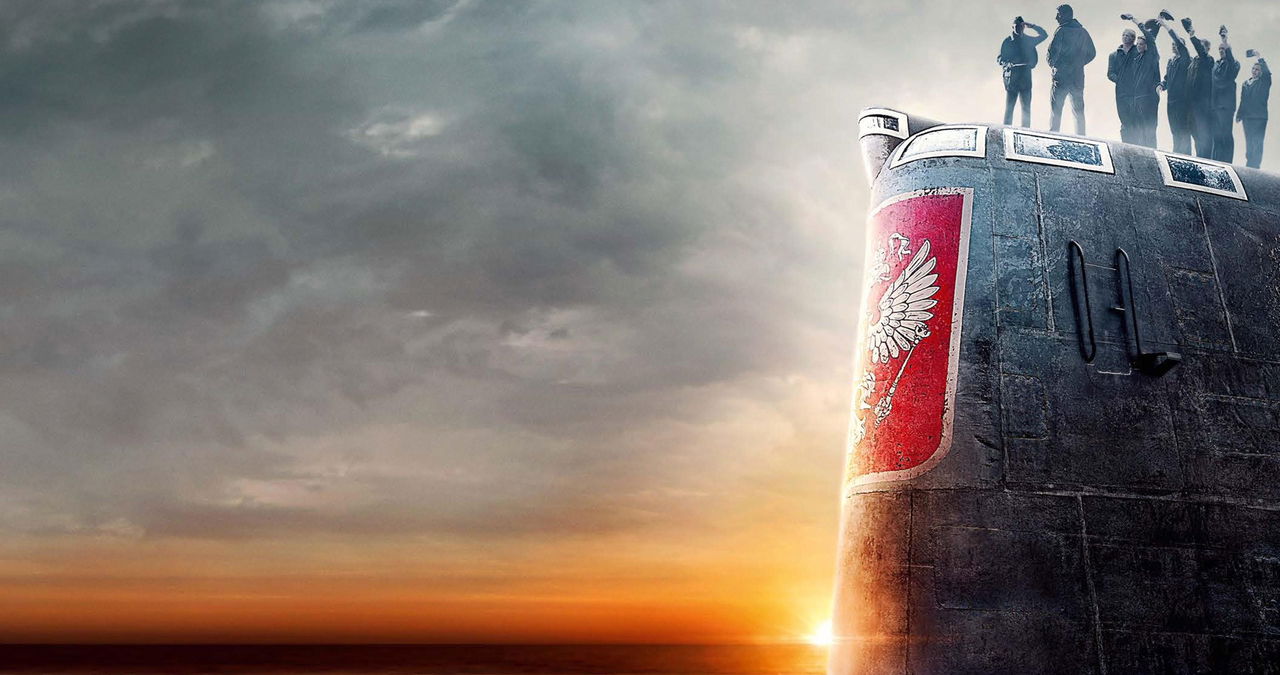
A political thriller, stylishly directed by former 'Dogma' director Thomas Vinterberg. The historical tragedy of the Russian submarine 'Kursk' takes centre stage
"How long will the oxygen on board last?" a state newsreader asked the spokesperson for the Russian fleet anxiously. He holds an icon up to the camera and asks viewers to pray for the crew.
In August 2000, the Russian population learned in bits and pieces that a loaded torpedo had exploded on board a nuclear submarine. Shortly before Murmansk, the badly damaged "Kursk" sank to the bottom of the Barents Sea with a crew of 118. 23 men had managed to save themselves in a safe section of the submarine - "The Command" reconstructs their story.
Among the survivors, whose relatives are left in the dark for a long time about the extent of the tragedy, is Lieutenant Commander Mikhail Averin (Matthias Schoenaerts). His wife Tanya (Léa Seydoux) and other women desperately demand adequate rescue measures and information. For reasons of prestige and fear of espionage, the Russian government initially refuses not only to tell the truth, but also to provide any international assistance. Even when British Commodore David Russell (Colin Firth) offers his assistance with the rescue, the Russians remain stubborn. But time is running out for the survivors...
For the world, this worst naval disaster to date in the new Russia was also a test for Putin, who had recently risen from head of the secret service to prime minister and finally president. In his speech to the relatives of the missing, he outlined his vision of an authoritarian state in the imperial tradition for the first time, as a tape leak made public. For months, the Russian military claimed that the Kursk had been rammed by a US submarine, which caused the accident.
This oppressive, multi-layered drama by Danish director Thomas Vinterberg, who previously directed award-winning films such as "The Feast" and "Intoxication", not only traces the struggle and growing desperation of those trapped in the ship. At the same time, it also addresses the incrustations of the political systems, the inhumanity of the generals and the effects that the disaster had on the families of the dead.
The crew of the Kursk, fighting for survival, and the military entourage on land, worried about their reputation, are played by well-known German actors: August Diehl, Matthias Schweighöfer, Martin Brambach, Peter Simonischek and Max von Sydow.
One fact is particularly shocking: contrary to what is portrayed in the film for dramaturgical reasons, the submarine was by no means at such great depth that the battery charge of the Russian submersible was barely sufficient for the journey and made a rescue mission impossible. In fact, the depth of the sea at the point where the "Kursk" sank is even less than the length of the submarine. It was relatively easy to reach.
"How long will the oxygen on board last?" a state newsreader asked the spokesperson for the Russian fleet anxiously. He holds an icon up to the camera and asks viewers to pray for the crew.
In August 2000, the Russian population learned in bits and pieces that a loaded torpedo had exploded on board a nuclear submarine. Shortly before Murmansk, the badly damaged "Kursk" sank to the bottom of the Barents Sea with a crew of 118. 23 men had managed to save themselves in a safe section of the submarine - "The Command" reconstructs their story.
Among the survivors, whose relatives are left in the dark for a long time about the extent of the tragedy, is Lieutenant Commander Mikhail Averin (Matthias Schoenaerts). His wife Tanya (Léa Seydoux) and other women desperately demand adequate rescue measures and information. For reasons of prestige and fear of espionage, the Russian government initially refuses not only to tell the truth, but also to provide any international assistance. Even when British Commodore David Russell (Colin Firth) offers his assistance with the rescue, the Russians remain stubborn. But time is running out for the survivors...
For the world, this worst naval disaster to date in the new Russia was also a test for Putin, who had recently risen from head of the secret service to prime minister and finally president. In his speech to the relatives of the missing, he outlined his vision of an authoritarian state in the imperial tradition for the first time, as a tape leak made public. For months, the Russian military claimed that the Kursk had been rammed by a US submarine, which caused the accident.
This oppressive, multi-layered drama by Danish director Thomas Vinterberg, who previously directed award-winning films such as "The Feast" and "Intoxication", not only traces the struggle and growing desperation of those trapped in the ship. At the same time, it also addresses the incrustations of the political systems, the inhumanity of the generals and the effects that the disaster had on the families of the dead.
The crew of the Kursk, fighting for survival, and the military entourage on land, worried about their reputation, are played by well-known German actors: August Diehl, Matthias Schweighöfer, Martin Brambach, Peter Simonischek and Max von Sydow.
One fact is particularly shocking: contrary to what is portrayed in the film for dramaturgical reasons, the submarine was by no means at such great depth that the battery charge of the Russian submersible was barely sufficient for the journey and made a rescue mission impossible. In fact, the depth of the sea at the point where the "Kursk" sank is even less than the length of the submarine. It was relatively easy to reach.